
Issac Asimov AI Short Story Recommendation
06 Aug 2026I’ve recently been rereading short stories from The Complete Robot by Issac Asimov. I’m particularly fond of the Powell and Donovan stories and the Susan Calvin stories. It was while rereading “Galley Slave” that I realised the monologue at the end of the story by the professor was quite prescient to our modern AI and Large Language Model world.
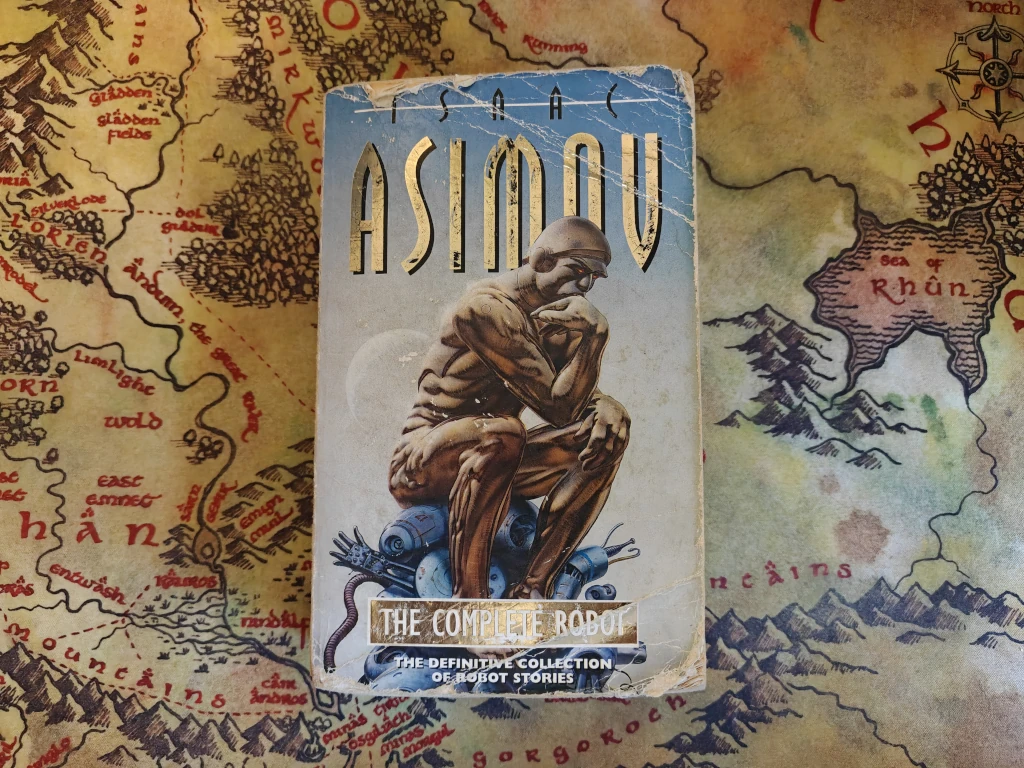
Originally published in 1957, Galley Slave is structured like a short courtroom drama concerning a professor of Sociology suing the producers of the robot known as “Easy”. The professor claims that the robot, while functioning as a proofreader for his book, edited passages of it to such an extent that it made him appear to be incompetent and damaged his reputation amongst his peers when published.
I won’t spoil the whole story, but aspects of it are interesting in our increasingly AI-driven world. For example, the fact that people begin to blindly trust the output of the robot, going so far as to not check its changes. This mirrors the way some people blindly trust the output of LLM powered AI, without verification. Even the more sceptical characters in the short story note that the robots output was flawless, at least in terms of grammar, but it lacked the knowledge to cite studies it was unaware of. Again similar to how our modern AI can only really reproduce what it has seen.
The monologue that I felt was prescient to today’s AI world went as follows:
He said, “For two hundred and fifty years, the machine has been replacing Man and destroying the handcraftsman. Pottery is spewed out of molds and presses. Works of art have been replaced by identical gimcracks stamped out on a die. Call it progress, if you wish! The artist is restricted to abstractions, confined to the world of ideas. He must design something in mind-and then the machine does the rest.
“Do you suppose the potter is content with mental creation? Do you suppose the idea is enough? That there is nothing in the feel of the clay itself, in watching the thing grow as hand and mind work together? Do you suppose the actual growth doesn’t act as a feedback to modify and improve the idea?”
“You are not a potter,” said Dr. Calvin.
“I am a creative artist! I design and build articles and books. There is more to it than the mere thinking of words and of putting them in the right order. If that were all, there would be no pleasure in it, no return.“A book should take shape in the hands of the writer. One must actually see the chapters grow and develop. One must work and rework and watch the changes take place beyond the original concept even. There is taking the galleys in hand and seeing how the sentences look in print and molding them again. There are a hundred contacts between a man and his work at every stage of the game and the contact itself is pleasurable and repays a man for the work he puts into his creation more than anything else could. Your robot would take all that away.”
“So does a typewriter. So does a printing press. Do you propose to return to the hand illumination of manuscripts?”
“Typewriters and printing presses take away some, but your robot would deprive us of all. Your robot takes over the galleys. Soon it, or other robots, would take over the original writing, the searching of the sources, the checking and cross-checking of passages, perhaps even the deduction of conclusions. What would that leave the scholar? One thing only-the barren decisions concerning what orders to give the robot next! I want to save the future generations of the world of scholarship from such a final hell. That meant more to me than even my own reputation and so I set out to destroy US Robots by whatever means.”
As you can see, the concerns around automation have always been present. While Asimov would likely have been an enthusiastic proponent of large language model powered AI, he nevertheless understood the concerns around automation, especially in the creative fields. He clearly understood the risks in automating away the very things people take pleasure and build their competency around.
You can read the full short story on archive.org or better yet, purchase a copy of Issac Asimov’s The Complete Robot.
Comments